Two fermenters can have the same working volume and still perform very differently.
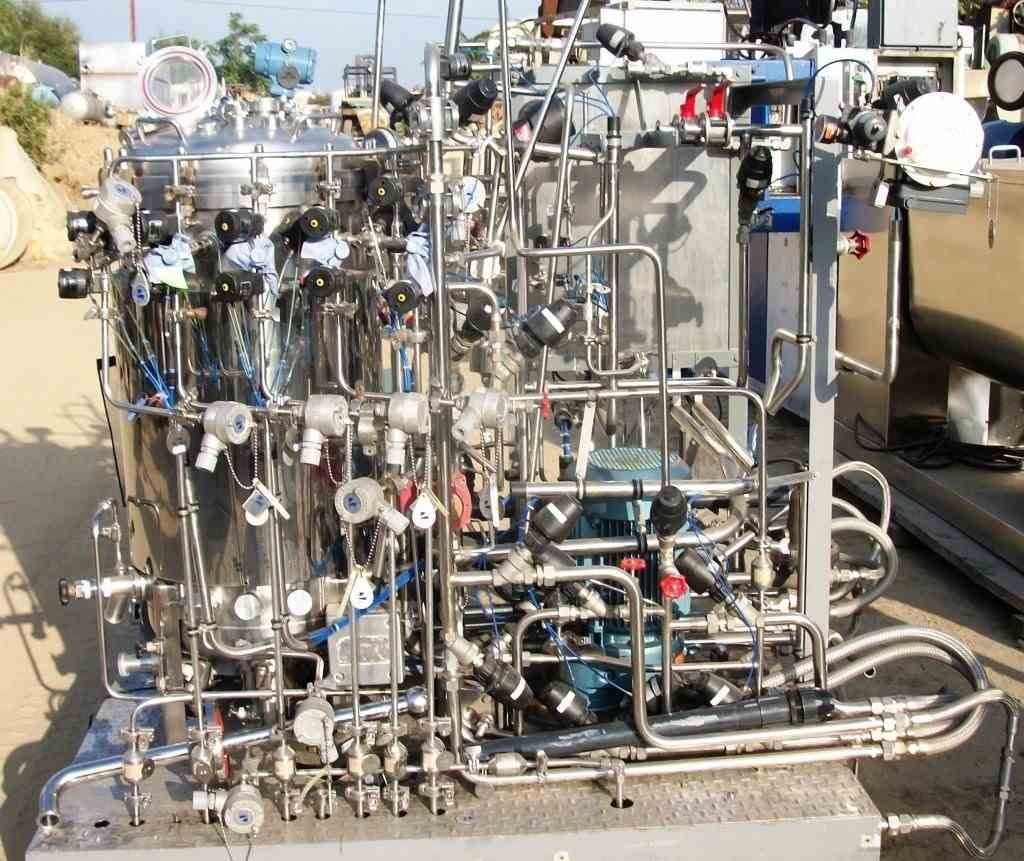
A vessel designed for high-density microbial fermentation may need aggressive agitation, high airflow, oxygen enrichment, and substantial cooling capacity. A bioreactor used for mammalian cell culture may require gentler mixing, lower shear, tighter gas control, and a different approach to sterilization.
Capacity is only the starting point. The organism, operating mode, oxygen demand, heat load, vessel geometry, agitation system, controls, and sanitary design all shape how the equipment performs.
In practice, fermenter selection comes down to six questions:
- What organism or cell type will be grown?
- How will the process operate?
- What working volume and production rate are required?
- How much mixing, gas transfer, and cooling will the process need?
- What cleaning, sterilization, and control systems are required?
- What equipment and documentation are included?
This guide explains how to answer those questions and evaluate both new and used fermenters or bioreactors.
Fermenter vs. Bioreactor: What Is the Difference?
The terms fermenter and bioreactor often overlap.
Bioreactor is generally the broader term. It can describe a controlled vessel used for microorganisms, animal cells, plant cells, enzymes, or other biological systems. Fermenter is most often associated with microbial processes involving bacteria, yeast, or fungi.
In commercial equipment listings, either term may describe anything from a small controlled culture system to a large stirred production vessel. The terminology matters less than the process the equipment must support.
Start With the Organism and Process
The organism sets the first equipment requirements. Common production organisms and cell types include bacteria, yeast, filamentous fungi, mammalian cells, insect cells, plant cells, and algae. Each responds differently to mixing, oxygen, temperature, pressure, and shear. Bacteria and yeast may grow quickly and consume oxygen at high rates.
Large microbial fermenters often need strong agitation, high gas flow, effective foam control, and considerable cooling capacity. Filamentous fungi can produce viscous broths that become harder to mix and aerate as the culture develops.
Mammalian and insect cells generally grow more slowly and may be more sensitive to shear. These processes often use lower agitation speeds, gentler impellers, and more precise gas control. The process may also be aerobic or anaerobic.
Aerobic cultures require oxygen transfer into the liquid. Agitation, sparging, gas composition, and vessel pressure all influence how much oxygen becomes available to the culture.
Anaerobic processes shift the equipment focus toward oxygen exclusion, inert-gas control, gas collection, pressure management, and safe exhaust handling.
The operating mode matters too.
Batch
Most or all of the starting medium enters the vessel before the run begins. The process continues until the target endpoint is reached.
Fed-Batch
The run begins with a partial charge, and nutrients or other ingredients are added over time. Fed-batch systems often need accurate feed pumps, load cells or flow measurement, sufficient headspace, and controls that can manage several additions throughout the run.
Continuous
Fresh medium enters while culture or product leaves the system. Continuous processes place greater emphasis on flow control, residence time, sterility, process stability, and long-duration operation.
Before selecting equipment, define the organism, operating mode, oxygen demand, shear sensitivity, foam tendency, broth viscosity, heat generation, and contamination risk. These factors drive the rest of the equipment decision.
Working Volume, Headspace, and Vessel Geometry
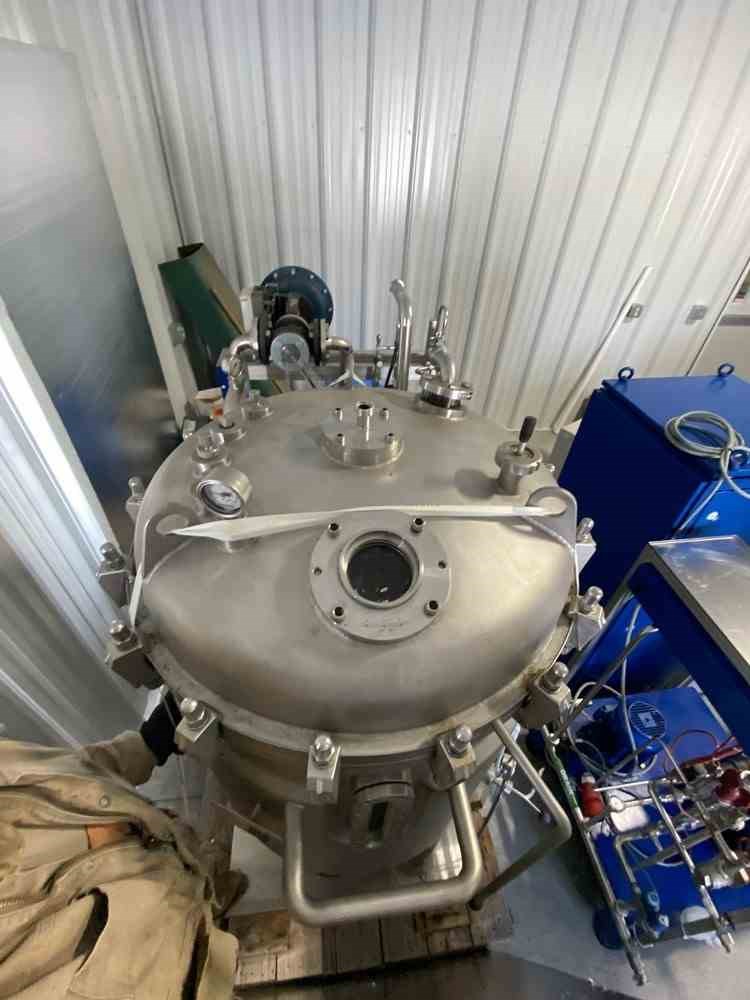
Bioreactor capacity may be listed as total volume, gross volume, nominal volume, or working volume. These numbers are not interchangeable.
Total volume is the vessel’s internal capacity.
Working volume is the intended operating liquid volume or volume range. It is lower than total capacity and must keep the impellers, spargers, probes, and heat-transfer surfaces operating as intended.
The space above the liquid allows for foam, gas disengagement, feed additions, liquid-level changes, and separation between the liquid and exhaust outlet. A vessel filled too close to its total capacity may have limited room for foam or feed additions. Liquid may also carry over into the exhaust system. A vessel operated at too low a level may leave an impeller, sparger, probe, or heat-transfer surface partially uncovered. That can change mixing, oxygen transfer, temperature control, and sensor performance.
When reviewing a fermenter, confirm:
- Total vessel volume
- Recommended working-volume range
- Minimum practical working volume
- Starting batch volume
- Final volume after feeding
- Required headspace
Vessel Geometry
Vessels with the same working volume can still behave differently. Important features include vessel diameter, straight-side height, height-to-diameter ratio, head shape, baffles, impeller position, sparger position, nozzle arrangement, and bottom outlet design. Greater liquid depth can increase hydrostatic pressure and bubble travel distance. Actual gas-transfer performance still depends on the sparger, agitation, gas rate, broth properties, and operating pressure.
Tall vessels may also require multiple impellers to maintain circulation through the full liquid column. Wider vessels can reduce overall height but may need a different agitation arrangement.
Baffles are vertical plates installed along the vessel wall in many stirred systems. They interrupt circular flow and help the impeller create top-to-bottom circulation instead of simply spinning the liquid around the tank. Without adequate baffling, a vortex may form and reduce mixing efficiency.
Bottom shape and nozzle placement also affect drainage, cleanability, sampling, and product recovery. These features can be difficult or expensive to change later, making geometry especially important when evaluating used equipment.
Agitation, Aeration, and Oxygen Transfer
Agitation must provide enough circulation and gas dispersion without damaging the culture or consuming unnecessary power. A properly designed system keeps cells and solids suspended, disperses gas, blends feeds and pH-control agents, limits temperature gradients, and supports oxygen transfer.
Common Impeller Types
|
Impeller Type
|
Common Strength
|
Main Consideration
|
|
Rushton turbine
|
Gas dispersion and intensive mixing
|
Often higher power draw and local shear than efficient axial-flow designs under comparable duties
|
|
Pitched-blade impeller
|
Bulk circulation and solids suspension
|
Performance varies with blade angle, direction, speed, and vessel geometry
|
|
Hydrofoil or axial-flow impeller
|
Efficient bulk circulation, often at lower power draw
|
Gas-dispersion performance depends on the specific design and operating conditions
|
Impeller names alone do not establish performance. Diameter, blade angle, rotational speed, shaft position, number of impellers, vessel geometry, and broth properties all matter. Many production fermenters use several impellers along the same shaft. A lower impeller may disperse gas while upper impellers maintain circulation through the rest of the vessel.
When evaluating agitation, review the motor size, speed range, shaft arrangement, impeller type and diameter, number and position of impellers, seal design, baffle configuration, previous process viscosity, and expected shear sensitivity.
Sparging and Gas Control
A sparger introduces gas below the liquid surface, usually near the lower impeller. Common gas services include air, oxygen, nitrogen, and carbon dioxide. Air may provide most of the oxygen requirement. Supplemental oxygen may be added when airflow and agitation alone cannot maintain the required dissolved oxygen level.
Nitrogen may be used for inerting, anaerobic operation, or gas control. Carbon dioxide may be added for pH control or cell-culture applications. In some cell-culture processes, carbon-dioxide removal can be as important as oxygen delivery.
Dissolved Oxygen
Dissolved oxygen, often abbreviated DO, is the oxygen available in the liquid. A control system may maintain DO by adjusting agitator speed, airflow, oxygen enrichment, gas composition, or vessel pressure.
Oxygen-transfer performance is often characterized using kLa, the volumetric mass-transfer coefficient. It reflects the system’s gas-liquid transfer capability under a defined set of operating conditions.kLa is useful for comparing systems and scaling a process, but it cannot be determined from vessel size or agitator horsepower alone. Gas flow, impeller design, sparger design, broth properties, vessel geometry, and operating pressure all influence oxygen transfer.
Foam Control
Depending on the organism and medium, foam-management provisions may include additional headspace, foam probes, antifoam dosing, foam traps, mechanical foam control, adjusted gas flow, or greater exhaust-filter capacity. Foam entering the exhaust system can wet or restrict a filter and increase vessel pressure.
Antifoam should be controlled carefully because it can change bubble behavior, gas dispersion, and oxygen transfer. Foam control should therefore be considered during equipment selection rather than treated only as an operating issue.
Exhaust-Gas Handling
Gas entering the vessel must also leave safely. The exhaust system may include condensers, foam traps, sterile filters, pressure-control valves, gas analyzers, scrubbers, or containment equipment.It should handle the expected gas rate without creating excessive backpressure or increasing contamination risk.
Temperature Control, Pressure Ratings, and Utilities
In fast-growing or high-density fermentation, available cooling capacity can limit the achievable operating rate or cell density. Cellular activity generates heat, and agitation transfers mechanical energy into the broth. External recirculation, warm inlet streams, and surrounding equipment may add further heat in some systems.
Temperature-control systems may use vessel jackets, dimple jackets, half-pipe jackets, internal coils, external heat exchangers, or recirculating temperature-control units.
Small systems may rely on a simple jacket. Larger or more productive processes may need greater heat-transfer area or an external recirculation loop. A vessel may have the right capacity and agitation system but still be unsuitable if the available cooling surface or facility utility cannot remove the process heat. Review the jacket design, heat-transfer area, cooling-water temperature, steam availability, temperature-control capacity, expected heat load, and sterilization requirements.
Pressure and Temperature Ratings
Fermenters may have separate ratings for the vessel interior, jacket, coil, vacuum service, maximum allowable working pressure, and design temperature. The nameplate and vessel documentation identify the applicable allowable pressure and temperature limits. Normal operating pressure should remain within those limits and may be substantially lower.
The internal rating must accommodate process pressure, static liquid head, gas pressure, sterilization conditions, and credible upset scenarios. The jacket rating must match the heating and cooling utilities.
Confirm whether the vessel interior, jacket, or both are rated for vacuum. Vacuum conditions can develop during steam condensation, cooling, draining, or other process operations if the system is isolated. Pressure and temperature limits should be confirmed from the vessel nameplate and documentation rather than inferred from size or previous service.
Utility Capacity
An available vessel may fit the batch size but still exceed the facility’s utility capacity. Confirm the requirements for compressed air, oxygen, nitrogen, carbon dioxide, steam, cooling water, electricity, vacuum, exhaust handling, and cleaning chemicals. Utility demand deserves particular attention when moving from pilot to production scale.
Maintaining a Clean and Sterile Process
Cleanability and sterilization depend on surface finish, welds, seals, piping, valves, drainage, spray coverage, and operating procedure. Stainless steel construction alone does not establish sanitary suitability.
Clean-in-Place
Clean-in-place, or CIP, uses a defined combination of cleaning chemistry, temperature, time, flow or spray action, coverage, and drainage to clean product-contact surfaces without fully dismantling the system.
A CIP system may include spray balls or rotary spray devices, cleaning-solution tanks, pumps, heaters, chemical dosing, return piping, and conductivity or temperature monitoring. A spray ball confirms that a cleaning device is present. It does not confirm that every internal surface receives effective coverage.
Sterilize-in-Place
Sterilize-in-place, or SIP, commonly uses clean steam to sterilize the vessel, piping, filters, valves, and instruments while the system remains assembled.
SIP capability requires suitable pressure and temperature ratings, steam connections, condensate removal, instrument and valve design, seal materials, piping slopes, and vent arrangements. A sanitary-looking vessel should not automatically be assumed to support SIP.
Drainability, Sampling, and Harvest
Poor drainage can leave cleaning solution, process residue, or water in the vessel.
Review the bottom outlet, low-point drains, piping slope, nozzle arrangement, dip tubes, sample valves, harvest connections, and transfer pumps. Aseptic sampling and product removal can be just as important as feeding and aeration. These details affect yield, contamination risk, cleanability, and turnaround time.
Materials and Product-Contact Surfaces
Stainless steel grades such as 304 and 316L are used in bioprocess equipment. Suitability depends on the process fluid, cleaning chemistry, sterilization conditions, chloride exposure, corrosion risk, fabrication quality, surface finish, gasket and seal materials, and documentation requirements.
The material grade alone does not establish cleanability, corrosion resistance, or regulatory suitability. Surface finish, weld quality, passivation history, seal materials, and documentation may matter just as much.
Depending on the industry and intended service, buyers may also need material traceability, weld documentation, surface-finish records, calibration history, control-system records, software documentation, or validation support. Mechanical suitability is only one part of the evaluation in regulated applications.
Instrumentation and Process Control

Instrumentation keeps the biological environment within its required operating range. Common measurements include temperature, pH, dissolved oxygen, pressure, foam, liquid level, weight, agitator speed, gas flow, and exhaust-gas composition.
The control system may operate feed pumps, acid and base pumps, antifoam pumps, gas valves, oxygen enrichment, heating and cooling valves, backpressure controls, sampling sequences, and batch recipes. Small development systems may use an integrated controller. Larger production systems may connect to a PLC or plant control system.
A basic microbial fermentation may require temperature, pH, dissolved oxygen, foam, airflow, and agitation control. A more complex process may also use mass-flow controllers, off-gas analysis, load cells, several feed streams, automated sampling, or advanced recipe control.
Control compatibility deserves close attention when evaluating used equipment. Older probes, drives, transmitters, software, or communication protocols may require upgrades even when the vessel itself remains suitable.
Stainless Steel vs. Single-Use Bioreactors
Both stainless steel and single-use systems can support laboratory, pilot, and production applications.
Stainless Steel Systems
Stainless steel bioreactors are designed for repeated use. They may offer higher pressure and temperature capability, established CIP and SIP cycles, broad agitation options, long service life, large production volumes, and less reliance on disposable process bags. They also require cleaning, sterilization, utility capacity, validation, and ongoing maintenance.
Single-Use Systems
Single-use bioreactors use a disposable process bag or container supported by an external structure. The support vessel or frame may include an agitation drive, load cells, heating or cooling, bag-retention hardware, controls, and gas-management connections. The disposable assembly may contain the product-contact surfaces, tubing, impeller, spargers, and sensor interfaces.
Single-use systems often reduce cleaning work and shorten changeovers. Their suitability depends on the specific system’s operating pressure, temperature, working-volume range, mixing, oxygen transfer, bag availability, consumable cost, and waste handling.
A used listing described as a single-use bioreactor may include only the support vessel, drive, or frame. Confirm whether it also includes the disposable assemblies, controller, gas-management panel, sensors, spargers, tubing sets, proprietary hardware, and compatible consumables.Consumable availability from the original manufacturer can be just as important as the condition of the support equipment.
Scaling From Development to Production
A process that performs well in a 10-liter bioreactor will not behave the same way in a 1,000-liter vessel. As scale increases, the distances within the vessel increase. Mixing, gas dispersion, heat removal, feed distribution, pH control, and sampling response can all change.
Important scale-up considerations include mixing time, oxygen-transfer rate, power input per unit volume, impeller tip speed, gas flow per unit volume, heat-transfer area, shear, vessel geometry, and impeller arrangement.
Maintaining every parameter at the same relative value is usually impossible. Increasing agitator speed can improve circulation and oxygen transfer, but it also increases mechanical-energy input and may increase shear exposure. A constant-tip-speed approach may reduce changes in local shear, but it does not guarantee equivalent mixing time or oxygen transfer at a larger scale. Scale-up therefore requires deciding which parameters matter most to the process. For high-demand microbial fermentation, oxygen transfer and cooling may drive the design. For shear-sensitive cell culture, circulation and shear limits may carry more weight.
For fed-batch operation, mixing time may be critical because concentrated feeds can create local pH or nutrient gradients when they are not dispersed quickly.A seed train may also be required. Smaller vessels should provide enough inoculum for the next stage while supporting sterile transfer, compatible connections, and practical batch timing.
Vessel similarity helps, but geometry alone does not guarantee equivalent performance.
What to Check Before Buying a Used Fermenter or Bioreactor
Most used-equipment listings provide enough information to determine whether a system deserves closer review. A listing may identify the manufacturer, model, working or total volume, material of construction, internal and jacket ratings, agitator arrangement, impeller type, baffles, sparger, gas inlets, spray devices, pumps, controls, instrumentation, previous service, and included support equipment.
A small development system may include integrated pH, dissolved-oxygen, pump, and gas controls. A production fermenter may be listed with separate vessel and jacket ratings, several impellers, gas inlets, spargers, spray devices, controls, and supporting vessels.
Four questions usually narrow the field quickly.
Is It the Right Size and Geometry?
Begin with working volume rather than the largest capacity stated in the listing. Confirm the starting volume, final fed-batch volume, required headspace, minimum operating volume, vessel height, floor space, installation access, and impeller and sparger coverage. A vessel with adequate total capacity may still be poorly suited to the intended batch size or facility.
Does It Support the Process?
Review the agitation range, impeller arrangement, baffles, sparger design, gas connections, oxygen capability, heat-transfer system, pressure and temperature ratings, CIP or SIP provisions, sensor ports, feed connections, sampling and harvest arrangements, and exhaust configuration.
A vessel equipped with an agitator and sparger may still need additional gas controls, sensors, cooling capacity, feed pumps, exhaust filtration, or automation.
Is There Enough Condition and Documentation Information?
Year built and previous service provide useful context, but they do not establish condition.
Available documentation may include:
- Nameplate data
- Drawings
- Vessel records
- ASME stamp or vessel-code documentation, when applicable and available
- Material certificates
- Weld records
- Surface-finish information
- Maintenance history
- Calibration records
- Control-system documentation
- Inspection reports
- Prior process information
Previous service can be as important as vessel condition. Buyers may need to understand what the system processed, which cleaning chemicals were used, whether it handled allergens or potent materials, whether corrosive ingredients or solids were present, and what cleaning records are available.
A closer inspection may examine the vessel, jacket, agitator, shaft, seals, impellers, spray devices, valves, instruments, controls, and utilities.
What Is Included?
A complete fermentation system extends beyond the vessel.Included equipment may consist of a control panel o r PLC, gas-flow controls, feed pumps, acid, base, and antifoam pumps, load cells, an exhaust condenser, sterile filters, sampling systems, a CIP skid, a temperature-control unit, a heat exchanger, steam controls, transfer pumps, seed vessels, media-preparation vessels, or hold tanks.
Included equipment can reduce the amount of engineering and integration required for a new installation. Each component should still be checked for capacity, condition, documentation, and compatibility. A used bioreactor can sometimes support a different process when its geometry, ratings, agitation, gas handling, heat transfer, condition, and documentation align with the new requirements.
A Practical Fermenter Selection Process
A practical selection process can be reduced to six steps.
1. Define the Biological System
Identify the organism or cell type, oxygen requirement, shear sensitivity, growth behavior, foam tendency, heat generation, and contamination risk.
2. Define the Process
Establish whether the process will be batch, fed-batch, or continuous. Document the starting volume, final volume, feeds, gas requirements, pressure, temperature, cycle time, and sterilization method.
3. Establish Production Requirements
Determine the required batch size, annual production target, batch frequency, turnaround time, scale-up path, and seed-train requirements.
4. Define Utility and Control Requirements
Identify the required air, oxygen, nitrogen, carbon dioxide, steam, cooling water, electricity, vacuum, exhaust capacity, instrumentation, and automation.
5. Match the Vessel and Process Systems
Compare working volume, geometry, agitation, sparging, heat transfer, pressure ratings, materials, ports, cleanability, instrumentation, and sampling and harvest arrangements.
6. Evaluate the Complete Installation
Review the vessel together with its pumps, gas controls, filters, controls, cleaning systems, downstream equipment, documentation, consumables, and facility requirements. This sequence keeps the selection tied to the process from the beginning.
Choosing the Right Fermenter or Bioreactor
The organism defines the environment the equipment must maintain. Once oxygen demand, shear tolerance, temperature, sterility, batch volume, and control requirements are clear, the suitable vessel configurations become easier to identify.
The strongest option is the system that can maintain those conditions reliably at the intended scale while fitting the facility, utilities, documentation requirements, and project economics. A used fermenter can provide a practical starting point when its geometry, agitation, gas handling, heat-transfer capacity, ratings, condition, and documentation support the new process.