Two extruders with similar screw diameters and motor sizes can produce very different results.
Screw arrangement, torque, speed, barrel configuration, and feeding method all influence how material moves through the machine. Those differences affect mixing, production rate, process stability, and the finished product.
Single screw and twin screw extruders are both used for continuous processing, but they are often selected for different duties. Single screw machines are commonly used to convey, melt, pressurize, and shape a consistent material. Twin screw machines are often selected when the process also requires substantial mixing, ingredient addition, venting, devolatilization, or reaction inside the barrel.
Choosing the right design affects product quality, maintenance, process flexibility, and total project cost.
This guide explains how single screw and twin screw extruders differ, where each design is commonly used, and what to consider when evaluating a used extruder.
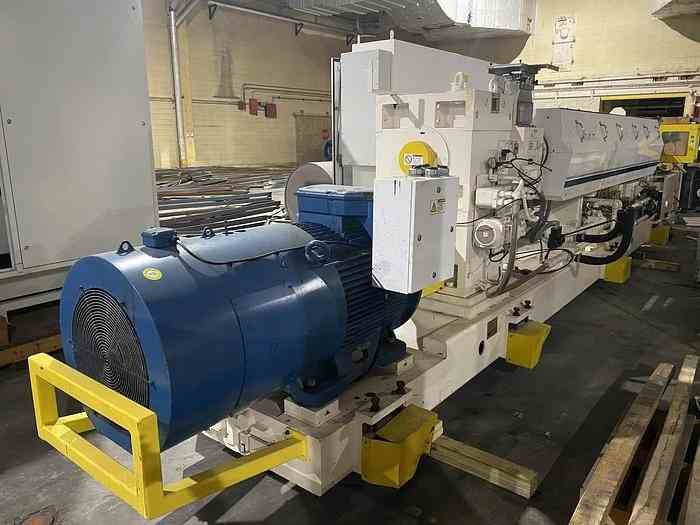
What Is the Difference Between a Single Screw and Twin Screw Extruder?
Single screw extruders use one rotating screw. Twin screw extruders use two.
That difference influences how material is conveyed, mixed, heated, compressed, vented, and discharged throughout the process.
Single screw extruders are commonly used when the formulation has already been prepared and the primary duty is to melt, pump, and shape the product.
Twin screw extruders are often used when several processing steps must occur inside the barrel. These may include blending additives, incorporating fillers, removing moisture or volatile compounds, and carrying out a reaction.
Co-rotating intermeshing twin screw extruders are widely used for compounding because their modular screw and barrel designs can combine conveying, melting, mixing, dispersing, devolatilization, and pressure development in one machine.
Each design has its place. Selection begins with the work the material must undergo before it reaches the die or discharge.
How a Single Screw Extruder Works
A single screw extruder uses one rotating screw inside a barrel that is typically divided into several temperature-control zones.
Material enters through the feed throat and moves forward as the screw rotates. Heat from the barrel and mechanical energy from the screw may soften, melt, mix, compress, or pump the material before it leaves the machine.
Many conventional polymer-processing screws contain three general sections:
- Feed
- Compression or transition
- Metering
The feed section accepts and conveys the material. The transition section compresses it and assists with melting. The metering section helps create a more uniform flow toward the die or downstream equipment.
This three-zone arrangement is a common starting point rather than a universal design. Specialized machines may use barrier screws, mixing sections, vented barrels, grooved feed sections, or other screw geometries to improve melting, output, mixing, or degassing.
Typical applications include pipe, tubing, film, sheet, profiles, wire and cable coating, pelletizing, polymer extrusion, rubber processing, and selected food or specialty-material applications.
Single screw machines remain widely used because they can provide steady production with relatively straightforward mechanical construction.
How a Twin Screw Extruder Works
A twin screw extruder uses two screws inside the same barrel.
The screws may be intermeshing or non-intermeshing. They may also rotate in the same direction or in opposite directions.
Common configurations include:
- Co-rotating intermeshing
- Counter-rotating intermeshing
- Non-intermeshing twin screw
These arrangements can differ considerably in conveying behavior, shear, mixing, pressure development, and residence-time distribution.
Co-rotating intermeshing machines are widely used for polymer compounding and specialty processing. Counter-rotating designs are common in applications that benefit from different conveying, shear, or pressure characteristics.
Twin screw extruders are especially useful when substantial material development must occur inside the barrel.
Depending on the screw and barrel configuration, the machine may convey pellets, powders, flakes, liquids, fibers, or pastes. It may also blend ingredients, disperse pigments and fillers, incorporate fibers, remove volatile compounds, control residence time, or carry out reactive processing.
Many co-rotating twin screw extruders use modular barrels and screw elements. Conveying elements, kneading blocks, mixing sections, and other components can be arranged to perform specific operations along the process length.
Why Twin Screw Extruders Offer Greater Mixing Capability
Twin screw extruders generally offer greater mixing flexibility because the two screws repeatedly divide, transfer, and recombine the material.
In an intermeshing design, material can move between adjacent screw channels rather than remaining in one continuous helical flow path.
Mixing is commonly divided into two categories.
Distributive Mixing
Distributive mixing spreads ingredients evenly throughout the material without necessarily reducing particle size.
It is useful for blending colors, liquids, minor additives, and other ingredients that require uniform distribution.
Dispersive Mixing
Dispersive mixing applies enough stress to break apart agglomerates, droplets, or particles.
It is often important when processing pigments, mineral fillers, carbon black, or additives that tend to form clusters.
Co-rotating intermeshing twin screw systems can be configured for both types of mixing. Kneading blocks and other mixing elements are placed where the process requires them.
Closely intermeshing screws may also create a wiping action between portions of the neighboring screw surfaces. This helps reduce stagnant material within the screw section. Material can still remain in dies, adapters, vents, feed openings, pelletizing equipment, and other parts of the line.
Single Screw vs. Twin Screw Extruders
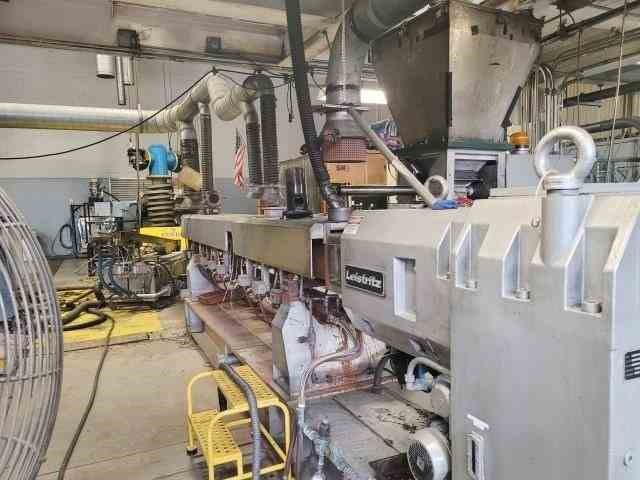
The following table provides a general comparison. Actual performance varies with the material, screw design, operating conditions, and supporting equipment.
|
Selection Factor
|
Single Screw Extruder
|
Twin Screw Extruder
|
|
Common process role
|
Melting, pumping, and shaping a prepared formulation
|
Mixing, compounding, venting, and developing a formulation
|
|
Feeding and conveying
|
Well suited to consistent feeds and established processes
|
Often more adaptable to multiple ingredients and difficult feeds
|
|
Mixing capability
|
Moderate, depending on screw design
|
High and configurable
|
|
Compounding
|
Possible in selected applications
|
Commonly preferred
|
|
Filled or reinforced materials
|
Suitable in some services
|
Often better suited, subject to torque and wear limits
|
|
Venting and devolatilization
|
Available on some designs
|
Commonly incorporated into the process section
|
|
Process flexibility
|
Moderate
|
High
|
|
Screw and barrel configuration
|
Usually less modular
|
Frequently modular
|
|
Mechanical complexity
|
Lower
|
Higher
|
|
Maintenance requirements
|
Generally more straightforward
|
More components and closer mechanical interaction
|
|
New equipment cost
|
Typically lower for a comparable basic duty
|
Typically higher for a comparable size
|
|
Used equipment evaluation
|
Focus on screw, barrel, drive, controls, and included line equipment
|
Focus on screw configuration, barrel, gearbox, torque, feeders, vents, controls, and auxiliaries
|
This comparison is a useful starting point, but the final decision should reflect the actual process.
When a Single Screw Extruder Makes Sense
A single screw extruder is often a practical choice when the material is already formulated and requires limited development inside the barrel.
Common applications include:
- Pipe extrusion
- Film production
- Sheet extrusion
- Profile extrusion
- Tubing
- Wire and cable coating
- Pellet extrusion
- Continuous processing of a stable polymer or compound
Single screw machines can be especially attractive for long production runs using consistent materials and limited formulation changes.
Their simpler mechanical design may also make operation, maintenance, and rebuilding more straightforward.
Specialized single screw machines can incorporate mixing sections, venting, additive injection, and other process features. The actual screw and barrel configuration therefore matters more than the number of screws alone.
When a Twin Screw Extruder Makes Sense
A twin screw extruder is often preferred when the material requires substantial development inside the machine.
Common applications include:
- Polymer compounding
- Masterbatch and color concentrates
- Mineral-filled compounds
- Glass-fiber reinforcement
- Reactive extrusion
- Devolatilization
- Plastic recycling
- Food processing
- Pharmaceutical processing
- Specialty chemicals
- Bioplastics
- Advanced materials
Twin screw machines can introduce ingredients at several points along the barrel.
The primary resin or ingredient may enter at the main feed throat, while fillers, fibers, liquids, or additives are introduced farther downstream through side feeders or injection ports.
Vent openings may remove moisture, solvents, air, residual monomers, odorous compounds, or reaction byproducts before the material reaches the die.
This modularity allows feeding, mixing, reaction, venting, and discharge functions to be arranged along the process section.
Key Factors When Choosing an Extruder
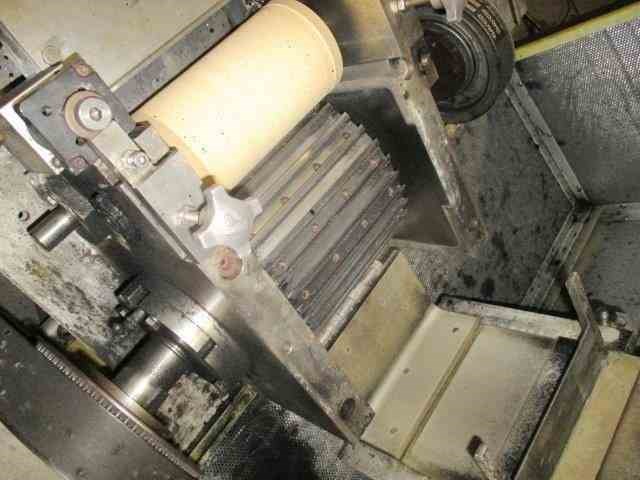
Once the general machine type has been narrowed down, the next step is matching the extruder to the process.
Material Characteristics
Start with the feed material and its physical form.
Pellets, powders, flakes, fibers, liquids, wet feeds, and pastes do not feed or process in the same way.
Important properties may include bulk density, particle size, moisture content, melt viscosity, abrasiveness, corrosiveness, heat sensitivity, and shear sensitivity.
Low-density powders and irregular recycled flakes, for example, may be harder to feed consistently than uniform pellets. Abrasive fillers and reinforcing materials can also accelerate screw and barrel wear.
Process Duty
Define what the material must undergo inside the barrel.
A single screw extruder may be sufficient when the process primarily involves conveying, melting, pumping, and shaping.
A twin screw machine often deserves consideration when the process includes intensive mixing, filler incorporation, several ingredient additions, reaction, or significant devolatilization.
Feeding Method
Many single screw extrusion processes are flood-fed. Material remains available at the feed throat, and the screw draws it into the barrel.
Twin screw compounding lines are often starve-fed. One or more metering feeders control the amount of material entering the machine.
This places greater importance on feeder accuracy and consistency. Irregular feeding can affect throughput, barrel fill, mixing, and product quality.
Throughput
Screw diameter alone does not establish production rate.
Throughput is influenced by screw speed, available torque, motor power, screw geometry, free volume, feed rate, bulk density, material viscosity, temperature, die restriction, venting requirements, and product-quality targets.
Maximum output is rarely the only objective. The more useful measure is output at the required quality and operating stability.
Torque and Screw Speed
Torque is particularly important when evaluating a twin screw extruder.
High-viscosity materials and heavily filled compounds can place substantial loads on the gearbox and screw shafts. A machine may have adequate motor power while still being limited by gearbox or shaft torque.
Screw speed also affects shear, mixing intensity, energy input, material temperature, residence time, and throughput.
The required operating range should reflect the material and the finished-product requirements.
L/D Ratio
L/D stands for length-to-diameter ratio.
It compares the effective screw length with the screw diameter and indicates how much process length is available.
That length may be used for feeding, melting, mixing, ingredient addition, reaction, venting, or pressure development.
A longer process section can also increase residence time, heat exposure, cleaning work, and floor-space requirements.
The appropriate L/D ratio reflects the sequence of operations that must occur inside the machine.
Venting and Devolatilization
Venting becomes important when the process must remove moisture, solvent, gas, or another volatile component.
Twin screw extruders are frequently configured with one or more vent sections because their screw elements can renew the material surface while maintaining continuous flow.
Effective venting also relies on the vacuum system, condensation equipment, barrel fill, feeder consistency, screw configuration, and residence time.
The number of vent stations alone does not establish devolatilization performance.
Temperature Control
Barrel temperature and screw speed are fundamental extrusion controls.
Heaters and cooling systems maintain the required temperature profile along the barrel. Mechanical energy from the screws also contributes heat to the material.
Heat-sensitive and shear-sensitive products may require tighter control of speed, temperature, residence time, and mixing intensity.
Abrasive or Corrosive Service
Filled, reinforced, or chemically aggressive materials may require special screw and barrel metallurgy.
Replaceable liners, wear-resistant alloys, surface treatments, and corrosion-resistant materials may be used depending on the service.
Previous service becomes especially important when evaluating a used extruder that handled abrasive or corrosive products.
Cleaning and Product Changeovers
Facilities that frequently change products, formulations, or colors should consider how the complete line will be cleaned.
A single screw machine is generally simpler mechanically, but material can remain in the screw, barrel, screen changer, adapter, die, and downstream equipment.
Twin screw machines contain more components, although some modular designs allow screw shafts and barrel sections to be opened or removed for cleaning and inspection.
Cleanability varies by machine and product. Neither design is universally easier to clean.
Future Flexibility
A machine intended for one stable product may not need extensive flexibility.
A facility expecting frequent formulation changes, new additives, additional venting, or new product grades may benefit from a modular twin screw configuration.
That flexibility should be weighed against greater mechanical complexity and the potential cost of replacement screw elements, barrel sections, feeders, and controls.
What to Check Before Buying a Used Extruder
A used extruder does not have to duplicate its original process to deserve consideration.
Most listings provide enough information to decide whether a machine deserves a closer look. This may include the manufacturer and model, screw diameter, L/D ratio, screw arrangement, motor or torque rating, heating and cooling method, vent locations, feeders, year built, operating hours, and included downstream equipment.
A twin screw compounding line, for example, may be listed with its screw diameter, co-rotating configuration, L/D ratio, torque rating, barrel controls, vent stations, side feeder, primary feeder, pelletizer, screener, and supporting water or condensation systems.
That information gives a buyer a practical starting point.
Four questions usually narrow the field quickly.
Is It the Right Type and Size?
Confirm whether the extruder is single screw or twin screw.
For a twin screw machine, identify whether it is co-rotating, counter-rotating, intermeshing, or another configuration when that information is available.
Review the screw diameter, L/D ratio, speed range, motor rating, and torque rating.
Together, these specifications indicate whether the machine falls within the right general range for the proposed application. They do not guarantee a specific production rate or product result.
Does It Have the Required Process Features?
Review the features the application depends on, such as:
- Vent stations
- Side feeding
- Gravimetric feeding
- Barrel heating and cooling
- Vacuum or condensation equipment
- Pelletizing equipment
- Screening equipment
- Operator controls
A line that already includes the required feeders, vents, pelletizer, and supporting equipment may require less integration than a standalone extruder.
The capacity and compatibility of each component should still be confirmed for the proposed service.
Is There Enough Condition Information?
Year built and operating hours provide useful context, although they do not establish condition by themselves.
Previous service and any available information about the screws, barrel, gearbox, bearings, drive, heaters, cooling circuits, controls, and maintenance history should also be reviewed.
Screw and barrel wear can affect clearances and machine performance. Previous use with abrasive or corrosive materials deserves additional attention.
Once the basic configuration appears suitable, a more detailed inspection or engineering review can follow.
What Is Included With the Line?
The value of a used extrusion system often extends beyond the extruder itself.
Feeders, side feeders, pelletizers, water systems, condensers, screeners, pumps, dies, controls, and other auxiliaries can represent a substantial portion of the total project cost.
A complete or nearly complete line may reduce both the equipment required and the amount of integration work needed before startup.
The strongest candidate is usually the machine whose screw arrangement, size, torque, process features, condition, and included equipment provide a practical foundation for the new application.
A Practical Extruder Selection Process
A practical selection process can be reduced to six steps:
- Define the feed material and its physical form.
- Determine whether the main duty is conveying and shaping or intensive mixing and compounding.
- Establish production rate, temperature, pressure, and product-quality requirements.
- Identify feeding, venting, additive, and downstream-equipment needs.
- Compare screw arrangement, torque, speed, L/D ratio, and barrel configuration.
- Evaluate condition, adaptability, equipment availability, and total installed cost.
This sequence usually narrows the options more effectively than starting with screw diameter or horsepower alone.
Single Screw or Twin Screw: A Useful Rule of Thumb
Single screw extruders are commonly selected when the formulation is already prepared and the machine primarily needs to convey, melt, pressurize, and shape the material.
Twin screw extruders are commonly selected when mixing, ingredient addition, reaction, venting, or substantial material development becomes part of the process itself.
Viewed this way, the decision becomes more straightforward.
Once the process requirements are defined, evaluating available equipment becomes easier. A used extruder does not have to duplicate the original installation, but its configuration, processing capability, condition, and included equipment should support the intended application.
When those factors align, used equipment can provide a practical alternative to a newly manufactured line while reducing capital requirements and avoiding at least part of the new-equipment fabrication schedule.
Frequently Asked Questions
What is the main difference between a single screw and twin screw extruder?
A single screw extruder uses one screw and is commonly used to convey, melt, pump, and shape a prepared material. A twin screw extruder uses two screws and generally provides greater flexibility for mixing, feeding multiple ingredients, venting, and compounding.
Is a twin screw extruder better for compounding?
Co-rotating intermeshing twin screw extruders are commonly preferred for demanding compounding duties because their modular elements can be configured for distributive and dispersive mixing, ingredient addition, and devolatilization.
What is the difference between co-rotating and counter-rotating twin screws?
Co-rotating screws turn in the same direction. Counter-rotating screws turn in opposite directions. Each arrangement produces different conveying, mixing, shear, and pressure characteristics.
Can a single screw extruder mix additives?
Yes. Single screw extruders can incorporate additives, particularly when equipped with dedicated mixing sections, injection points, or side-arm equipment. Twin screw machines are generally preferred when the process requires intensive or highly configurable mixing.
What does L/D ratio mean on an extruder?
L/D is the ratio of effective screw length to screw diameter. It indicates the amount of process length available for operations such as feeding, melting, mixing, venting, reaction, and pressure development.
Which extruder is better for recycling?
Either design may be used. Selection depends on the feed form, contamination, moisture, mixing requirements, filtration, devolatilization, and the desired final product.
What should be checked on a used extruder?
Start with the screw configuration, diameter, L/D ratio, speed, torque or motor rating, barrel arrangement, previous service, operating history, and included auxiliaries. Screw, barrel, and gearbox condition are especially important.
Can a used extruder be rebuilt for a different material?
Potentially. Feasibility depends on the manufacturer, model, condition, parts availability, available documentation, and the cost of changing the screws, barrel sections, controls, feeders, or downstream equipment.