Project Overview
When Occidental closed several specialty chemical operations at its Niagara Falls, New York facility, the company faced a substantial decommissioning project. Occidental had invested significant capital to expand and upgrade the specialty chemical facility in the late 1990s, leaving substantial recoverable value in the process assets when the operations closed. The company initially budgeted approximately $15 million for decommissioning and removal.
Beginning in 2001, Phoenix Equipment purchased nine plants, process units, and associated systems, along with an 80,000-square-foot laboratory and related equipment. Phoenix assumed the remarketing and removal risk as Occidental decommissioned, disconnected, and released each area. Over the next five years, Phoenix used the recovery value of the acquired assets to offset the cost of the work, completing its scope at no cost to Occidental.
The Challenge
The specialty chemical operations had been developed to utilize chlor-alkali feedstocks from an adjacent plant. After unfavorable business conditions led Occidental to close the operations in 1998–1999, the company attempted to sell the units as an operating business. When a going-concern sale did not materialize, Occidental moved toward removing the non-operating assets and buildings from the site.
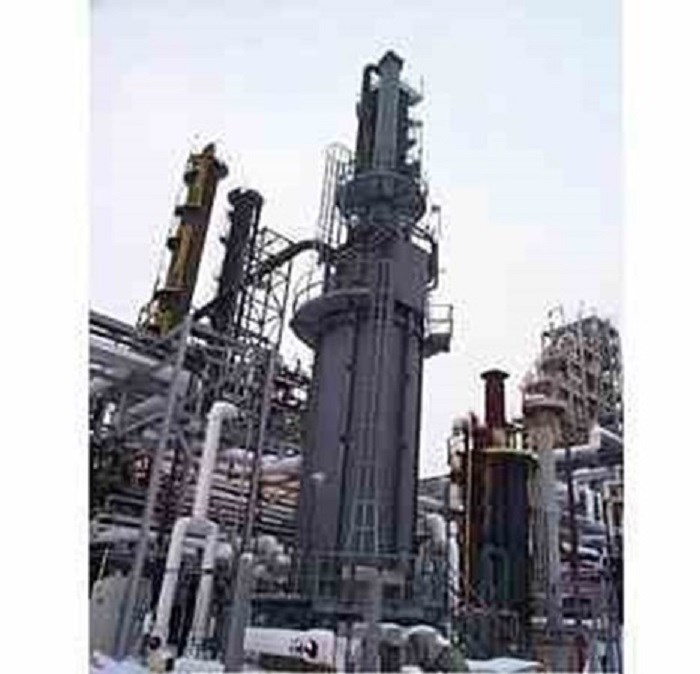
Phoenix's acquisition covered nine plants, process units, and associated systems, including ring chlorination, hydrofluorination, photochlorination, nitrilation, flexible chlorination, muriatic acid, phosphorous, an HF unloading system, and a liquid waste incinerator. The facilities also contained substantial quantities of late-model glass-lined equipment and high-alloy equipment, including nickel and Hastelloy.
The work could not be approached as a single demolition campaign. Occidental decommissioned and disconnected individual process areas in stages, releasing them to Phoenix over time. Each release established its own removal schedule, requiring Phoenix to coordinate asset recovery and dismantlement over several years while the larger chemical complex remained active.
Recovering Value Across Nine Process Units
Phoenix purchased the specialty chemical assets outright before knowing how every plant and piece of equipment would ultimately be sold. That placed the remarketing risk with Phoenix and made successful asset recovery central to the economics of the project.
Not every process followed the same disposition path. Phoenix found buyers for two complete process units for continued use. The remaining units were broken up, with equipment sold individually into the secondary market and other materials recovered for salvage. The facility contained substantial quantities of late-model glass-lined equipment and high-alloy equipment, including nickel and Hastelloy, which contributed significantly to the recoverable asset value.
The project also included an 80,000-square-foot laboratory. Phoenix found a buyer that could continue operating the laboratory in place, preserving the facility rather than including it in the removal scope.
A Five-Year, Staged Decommissioning
The project progressed from 2001 through 2006 as Occidental released individual process areas. Once a unit had been decommissioned and disconnected by Occidental, Phoenix assumed responsibility for the acquired assets and worked within the schedule established for that area.
The phased structure required Phoenix to manage equipment sales and physical removal concurrently over several years. It also required a substantial financial commitment from Phoenix. Because Phoenix was funding the work and assuming the remarketing risk, generating revenue from complete process sales, individual equipment sales, and material recovery was important to the economics of the multi-year project.
All of this work took place within a live chemical complex and on a former contaminated site, making coordination and safe execution particularly important throughout the five-year program. Despite the scale and duration of the work, the project was completed without a safety incident.
Project Outcome
Over the five-year project, Phoenix managed the disposition and removal of the specialty chemical assets while Occidental's larger Niagara Falls complex remained active. Two process units were sold for continued use, the remaining units generated value through individual equipment sales and salvage, and the 80,000-square-foot laboratory was sold for continued operation in place.
Phoenix completed the decommissioning scope without a safety incident and returned the released production areas broom clean to the tops of the concrete. Occidental had originally budgeted approximately $15 million for the decommissioning. By using the recovery value of the acquired assets to offset the cost of the work, Phoenix completed its scope at no cost to Occidental.
Project Highlights
- Client: Occidental
- Location: Niagara Falls, New York
- Project: Specialty Chemical Facility Decommissioning & Asset Recovery
- Specialty Chemical Operations Closed: 1998–1999
- Project Period: 2001–2006
- Assets Acquired: Nine Plants, Process Units and Associated Systems, Plus an 80,000 Sq. Ft. Laboratory
- Complete Process Sales: Two for Continued Use
- Other Asset Recovery: Individual Equipment Sales and Salvage
- Notable Equipment: Late-Model Glass-Lined, Nickel and Hastelloy Equipment (See Liquidation)
- Project Environment: Active Chemical Complex
- Project Value: Approximately $15 Million
- Safety: No Incidents
- Final Condition: Broom Clean to Tops of Concrete
- Decommissioning Cost to Occidental: $0
Using Asset Value to Offset Decommissioning Costs
A decommissioning budget does not necessarily tell the full economic story of a closed industrial facility. At Niagara Falls, the same process areas that created a substantial removal obligation also contained complete process units, individual equipment, specialty materials, and facilities with secondary-market value.
Phoenix was willing to purchase those assets, invest in the removal work, and assume the risk of finding buyers over a multi-year period. That allowed asset recovery and decommissioning to proceed together as Occidental released each area. The recovery value ultimately offset the cost of Phoenix's scope, turning what had been budgeted as an approximately $15 million decommissioning expense into a no-cost project for Occidental.
Planning a complex multi-unit decommissioning project, managing idle balance sheet liabilities, or expanding your processing capacity? Contact the Phoenix Equipment team today to speak with us about your plant project and learn more about the capabilities Phoenix has to offer to help you achieve your operational and financial goals.