A distillation column can meet the required separation on paper and still be the wrong choice for the plant.
Pressure drop may be too high. Packing may foul. Trays may struggle at reduced rates. Maintenance access may be poor.
Tray and packed distillation columns can both perform well. The better choice depends on how the column will actually operate.
This guide compares tray columns and packed columns, explains where each design fits, and outlines what to check before buying a used distillation column.
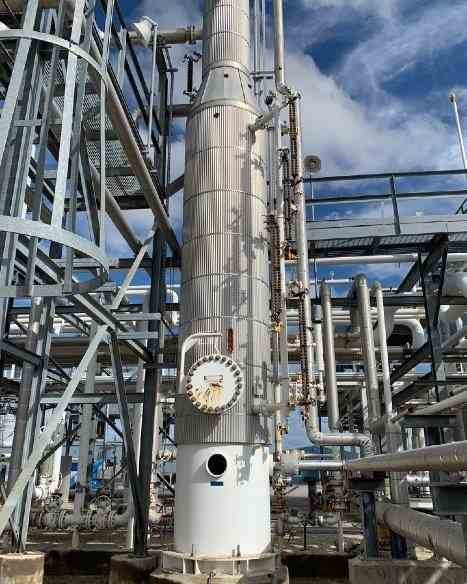
What Is the Difference Between a Tray and Packed Column?
Trays and packing are the internal contact devices inside a distillation column.
Both bring rising vapor into contact with descending liquid. That contact separates lighter and heavier components based on volatility.
A tray column uses a series of horizontal stages. A packed column uses beds of random or structured packing.
The shell and the internals are separate design decisions. A carbon steel, stainless steel, or glass-lined column may use trays or packing depending on the process.
In some cases, an existing column shell can be reused with new internals. The shell still has to match the process, pressure rating, dimensions, nozzle arrangement, and mechanical requirements.
How Tray Distillation Columns Work
A tray column separates components across a series of stages.
Liquid flows across each tray and enters a downcomer. Vapor rises through openings in the tray deck and contacts the liquid before continuing upward.
Each tray acts as an actual separation stage. Its performance depends on tray design, vapor rate, liquid rate, and fluid properties.
The most common distillation trays are sieve trays, valve trays, and bubble-cap trays.
Sieve trays
Sieve trays use fixed holes in the tray deck.
They are simple, economical, and contain no moving parts. They can provide good capacity and efficiency within their intended operating range.
At low vapor rates, liquid may leak through the openings. This is known as weeping and can reduce separation performance.
Valve trays
Valve trays use movable or fixed valves over openings in the deck.
They can adjust to changing vapor rates and often provide better turndown than conventional sieve trays. This makes them useful when plant rates vary.
Bubble-cap trays
Bubble-cap trays direct vapor through risers and beneath slotted caps.
They can maintain vapor-liquid contact at low vapor rates. They also tend to cost more and create greater pressure drop.
Sieve and valve trays are more common in many modern distillation services.
How Packed Distillation Columns Work
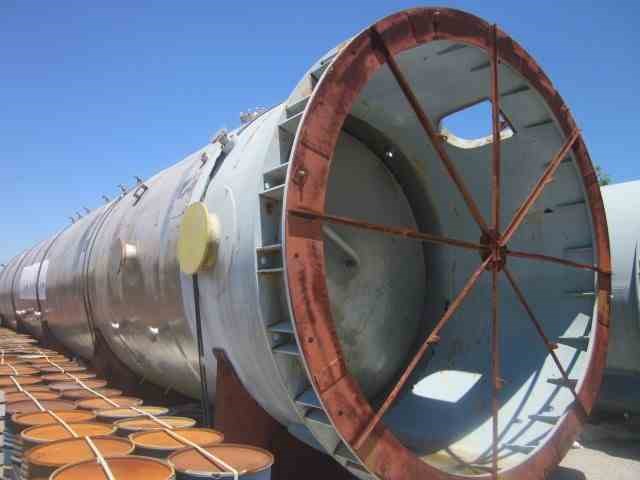
Packed distillation columns use a bed of material that creates surface area for vapor-liquid contact.
Liquid flows across the packing while vapor moves upward through the open spaces. Separation occurs continuously through the bed rather than on individual trays.
Packed columns use either random packing or structured packing.
Random packing
Random packing consists of individual pieces loaded into the column.
Common types include:
- Raschig rings
- Pall rings
- Saddles
- High-performance ring designs
Random packing can provide a practical balance of cost, capacity, and pressure drop.
Larger, more open packing may also tolerate some fouling better than tightly arranged structured packing.
Structured packing
Structured packing uses corrugated sheets installed in ordered layers.
It provides a large contact area while maintaining open vapor passages. This can produce high separation performance with low pressure drop.
Structured packing is often used in vacuum distillation, solvent recovery, specialty chemicals, and other services where pressure drop matters.
It does require good liquid distribution and careful installation.
Liquid Distribution in Packed Columns
Even the best packing performs poorly without good liquid distribution.
Liquid must spread evenly across the top of the bed. Poor distribution leaves some areas under-wetted while others receive too much liquid.
That can cause channeling, reduce effective contact area, and lower separation efficiency.
Packed columns may require:
- Liquid distributors
- Vapor distributors
- Packing supports
- Hold-down grids
- Liquid collectors
- Redistributors
Redistributors become especially important in taller packed beds.
Packing type matters. Distribution quality matters just as much.
Tray Columns vs. Packed Columns
No single comparison applies to every service. Tray type, packing type, column diameter, fluid properties, and operating rate can all change the result.
The following table provides a practical starting point.
|
Selection Factor
|
Tray Column
|
Packed Column
|
|
Pressure drop
|
Usually higher
|
Usually lower, especially with structured packing
|
|
Vacuum service
|
Suitable, but pressure drop may become limiting
|
Often preferred where low pressure drop is critical
|
|
Turndown
|
Valve trays can provide a wide operating range
|
Low liquid rates may cause poor wetting
|
|
Fouling
|
Open tray designs may tolerate fouling well
|
Structured packing can plug; open random packing may perform better
|
|
Liquid holdup
|
Usually higher
|
Often lower
|
|
Maintenance
|
Trays can be inspected individually
|
Packing may require removal for inspection
|
|
Small diameters
|
Trays may be difficult to fabricate and operate
|
Packing is often practical
|
|
Heat-sensitive products
|
May be suitable depending on pressure drop
|
Often attractive because of lower pressure drop and holdup
|
When Tray Columns Make Sense
Tray columns often make sense when the process has variable loads or difficult operating conditions.
Common reasons include:
- Wide changes in vapor or liquid rates
- Fouling or polymerizing service
- Limited solids in the feed
- Frequent inspection or cleaning
- Large column diameter
- Side draws or multiple feed points
- A need to access individual stages
Valve trays are often considered when turndown matters.
Open or specialized tray designs may suit fouling service.
A sieve tray and a valve tray can behave very differently at reduced rates, so the tray type should always be part of the selection.
When Packed Columns Make Sense
Packed columns often make sense when pressure drop and liquid holdup must remain low.
Typical conditions include:
- Vacuum distillation
- Heat-sensitive products
- Low allowable pressure drop
- Small-diameter columns
- High separation demand within limited height
- Corrosive service requiring nonmetallic internals
- Processes involving valuable or hazardous liquid inventory
Structured packing often fits clean, low-pressure-drop service.
Random packing may offer a lower-cost option or better tolerance for some less demanding applications.
The design must still maintain proper wetting and liquid distribution.
Fouling, Foaming, and Solids
Fouling, foaming, and solids often narrow the field faster than any performance calculation.
Fouling
Fouling can coat trays, valves, packing, and distributors.
An open tray deck with generous spacing may provide easier access and cleaning. Structured packing contains narrower flow channels and may plug in dirty service.
Open random packing may tolerate some fouling better than structured packing.
Foaming
Foam reduces available vapor space and can promote entrainment or flooding.
Tray spacing, vapor velocity, liquid depth, and fluid properties all affect foaming behavior.
Packed columns may have lower liquid holdup, but they can still flood if foam fills the open space.
Solids
Solids can block tray openings, collect in downcomers, plug distributors, or lodge within packing.
Processes with meaningful solids loading require specialized review. Standard trays and dense structured packing may both be poor choices.
Pressure Drop and Vacuum Distillation
Pressure drop becomes especially important in vacuum service.
Pressure rises toward the bottom of the column. That higher pressure raises the boiling temperature in the lower section.
Heat-sensitive products may degrade if the pressure drop becomes excessive.
Structured packing is often selected for vacuum distillation because it can provide low pressure drop per theoretical stage.
Tray columns can also operate under vacuum. The acceptable design depends on column diameter, tray spacing, operating range, and allowable pressure drop.
The selection should follow hydraulic calculations rather than a general rule.
Capacity, Flooding, and Operating Range
Every distillation column has a hydraulic operating range.
At high vapor or liquid rates, the column may approach flooding. Liquid begins to back up, pressure drop rises, and separation performance falls.
At low vapor rates, tray columns may weep or dump liquid through the deck.
At low liquid rates, packed columns may suffer from poor wetting and uneven distribution.
The design should be evaluated across the full operating range, not only at maximum production.
Startup, reduced-rate operation, and feed changes can all expose weaknesses that do not appear at the main design point.
Material of Construction Is a Separate Decision
Tray versus packing selection does not determine the shell material.
The chemistry, temperature, pressure, contamination limits, and corrosion rate drive material selection.
Carbon steel
Carbon steel is common in compatible hydrocarbon and chemical services.
It offers broad fabrication options and may provide the lowest initial cost.
Stainless steel
Stainless steel provides improved corrosion resistance in many chemical, pharmaceutical, food, and solvent applications.
The selected grade still has to match the chemistry. Chlorides, acids, and high temperatures can affect different alloys in different ways.
Glass-lined steel
Glass-lined distillation columns may suit corrosive products that require high chemical resistance and product purity.
They also require careful handling.
Mechanical impact, thermal shock, or lining damage can compromise the equipment.
Other limitations include:
- Restricted field welding
- Difficult nozzle changes
- Careful internal installation
- Lining inspection requirements
- Temperature limitations
A glass-lined column may contain packing or other internals. Glass lining describes the vessel surface. Packing describes the contact system.
Can a Tray Column Be Converted to Packing?
Sometimes.
A conversion may be practical when the existing shell has suitable:
- Diameter
- Straight-side length
- Nozzle arrangement
- Manway access
- Pressure and temperature rating
- Internal support locations
- Mechanical condition
The conversion may require new support rings, packing supports, distributors, collectors, or redistributors.
Process engineers must confirm that the packed design can provide the required capacity and separation.
Mechanical engineers must review loads, attachments, corrosion, and code requirements.
The opposite conversion may also be possible. Installing trays in a packed-column shell may require new tray support rings, downcomer clearances, and access points.
A usable shell can reduce fabrication requirements. The geometry still has to fit the process.
What to Check Before Buying a Used Distillation Column
A used distillation column doesn't have to be an exact match for your process to be worth considering. The goal is to determine whether the vessel provides a suitable starting point.
Most equipment listings include enough information for an initial evaluation, including the material of construction, pressure and temperature rating, dimensions, manufacturer, year built, nozzle sizes, and previous service.
For example, a listing might describe a 304 stainless steel column rated for 53 PSI and full vacuum at 150°F, along with its diameter, straight-side length, nozzle configuration, manufacturer, and previous application. That information is often enough to decide whether the vessel deserves a closer look.
When evaluating a used column, start with four questions:
Is the vessel mechanically suitable?
Confirm the material of construction, design pressure, temperature rating, and overall dimensions. These establish whether the column falls within the basic requirements of your process.
Is it the right size?
Column diameter affects capacity, while available height influences the amount of trays or packing that can be installed. A column that is too small or too short may not provide the required separation.
Can it be adapted?
Review the nozzle arrangement and any available information about the internals. Many used columns are successfully repurposed by replacing trays, packing, or other internals rather than the vessel itself.
Is the condition acceptable?
Previous service, available documentation, and a visual inspection can help identify whether the column is a good candidate for reuse. If the equipment appears suitable, a more detailed engineering review can follow.
A used distillation column is rarely selected because it is identical to the original design. It is selected because the vessel provides the right foundation for the process while reducing capital cost and shortening project schedules.
Tray or Packed Column: A Useful Rule of Thumb
Structured packing often deserves consideration when low pressure drop, vacuum operation, or low liquid holdup matters most.
Trays often deserve consideration when operating flexibility, direct inspection, fouling tolerance, or stage-by-stage access carries more weight.
Random packing can provide a practical middle ground in smaller columns and less demanding services.
These are starting points. The final choice depends on the fluid properties, operating range, column dimensions, maintenance requirements, and project economics.
For existing plants, that choice does not always require a newly fabricated vessel. A properly evaluated used distillation column may provide the right shell, while new or modified internals adapt it to the process.
The best column is the one that works hydraulically, fits mechanically, and makes sense economically. All three have to line up.
Frequently Asked Questions
Are packed columns more efficient than tray columns?
Not in every application.
Structured packing can provide high separation performance with low pressure drop. Tray columns can also achieve demanding separations when the tray type and operating conditions are properly designed.
Are packed columns better for vacuum distillation?
They are often preferred because structured packing can provide low pressure drop.
Lower pressure drop helps control boiling temperatures in heat-sensitive vacuum service.
Tray columns can also work under vacuum. The allowable pressure drop and operating range determine the choice.
Which design handles fouling better?
Open and widely spaced tray designs often provide better access and fouling tolerance than structured packing.
Large, open random packing may also handle some fouling services.
The deposit type and cleaning method matter.
Which column provides better turndown?
Valve trays often provide a wide operating range.
Sieve trays can weep at reduced vapor rates. Packed beds can lose performance when liquid rates become too low for proper wetting.
Can used distillation columns receive new internals?
Yes, when the shell dimensions, ratings, access, and support arrangement permit the change.
The new internals still require process design, hydraulic rating, and mechanical review.