How Asset Recovery Reduced the Cost of Redeveloping a Former Chemical Plant
When Cardolite, a major producer of Cashew Nut Shell Oil (CNSL), ceased manufacturing at its Newark, New Jersey facility, the property's new owner planned to redevelop the site into a warehouse and distribution center. Rather than treating every asset as scrap, Phoenix recovered and sold surplus process equipment through the secondary process equipment market, helping offset the owner's redevelopment costs.
The new owner purchased the property as-is, inheriting a chemical manufacturing facility that still required extensive cleaning before redevelopment could begin. Product left in tanks, piping, and process equipment had solidified after the shutdown, while other systems still contained liquids that had to be safely removed. Phoenix stepped in to plan and execute the cleanup, preparing the site for equipment recovery, demolition, and redevelopment.
Beyond the cleanup effort, the property contained three major tank farms, more than 30 storage tanks, thousands of linear feet of process piping, and a wide range of process equipment. While portions of the facility would be demolished, much of the equipment still retained value for continued industrial use. Identifying and recovering those assets became an important part of the redevelopment strategy.
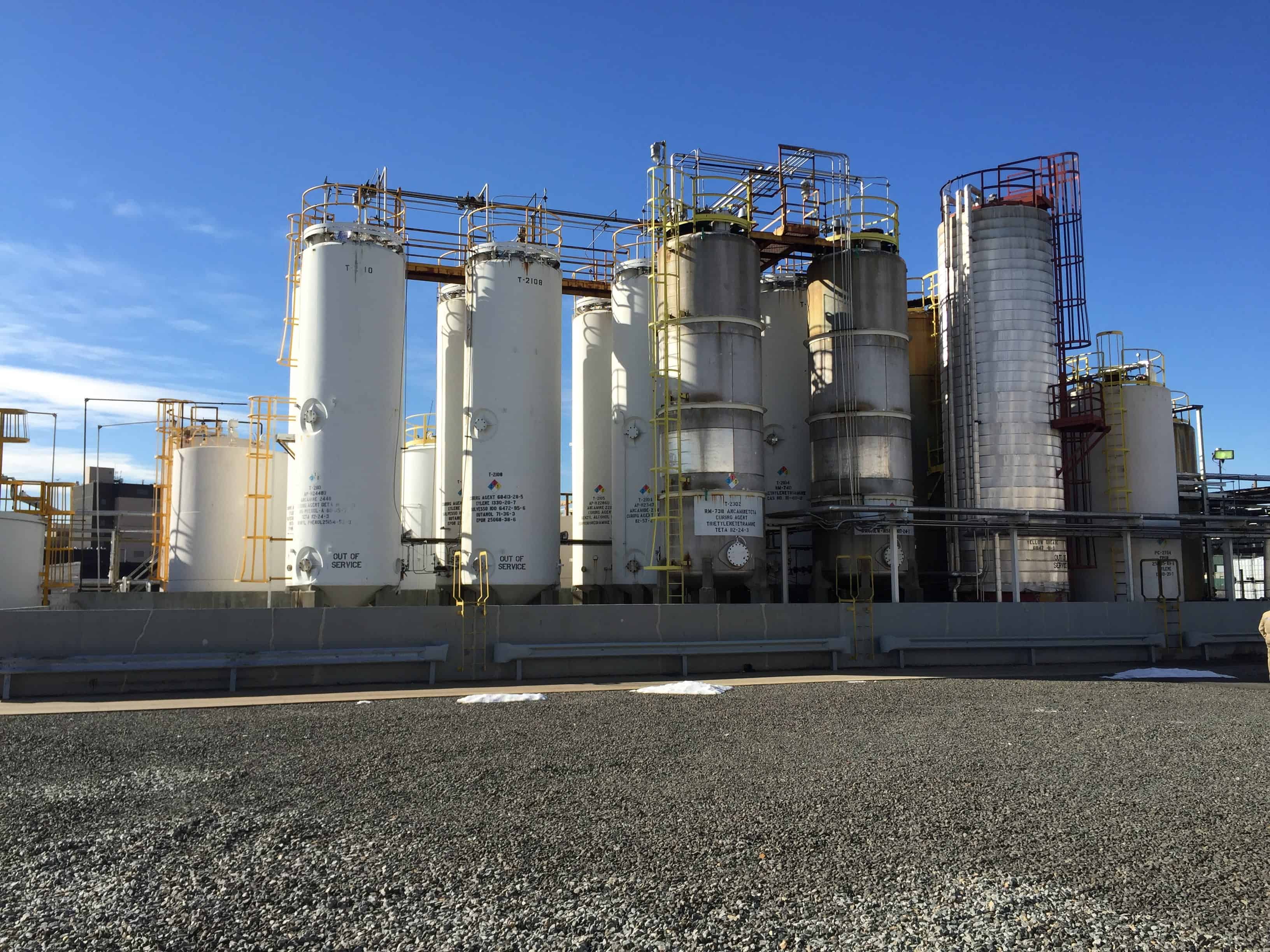
Project Overview
The former manufacturing site contained approximately 20 buildings. Nine production buildings accounted for roughly 50,000 square feet, while eleven office and warehouse buildings totaled approximately 100,000 square feet.
Redeveloping the property required selective demolition, utility separations, hazardous material removal, equipment recovery, and regulatory coordination across the site while preparing it for its next use.
Why Phoenix Was Selected
The owner was not simply looking for a demolition contractor. Recovering value from surplus process equipment was an important part of the redevelopment strategy.
Phoenix managed the demolition, utility separations, environmental work, subcontractor coordination, and regulatory requirements under one project. At the same time, Phoenix's established position in the secondary process equipment market provided a practical outlet for equipment that still retained industrial value.
Usable tanks and process equipment could be identified, removed, cleaned, and marketed to industrial buyers rather than being treated as scrap. This equipment selling capability helped offset the owner's overall project costs and was a major factor in choosing Phoenix.
Project Execution
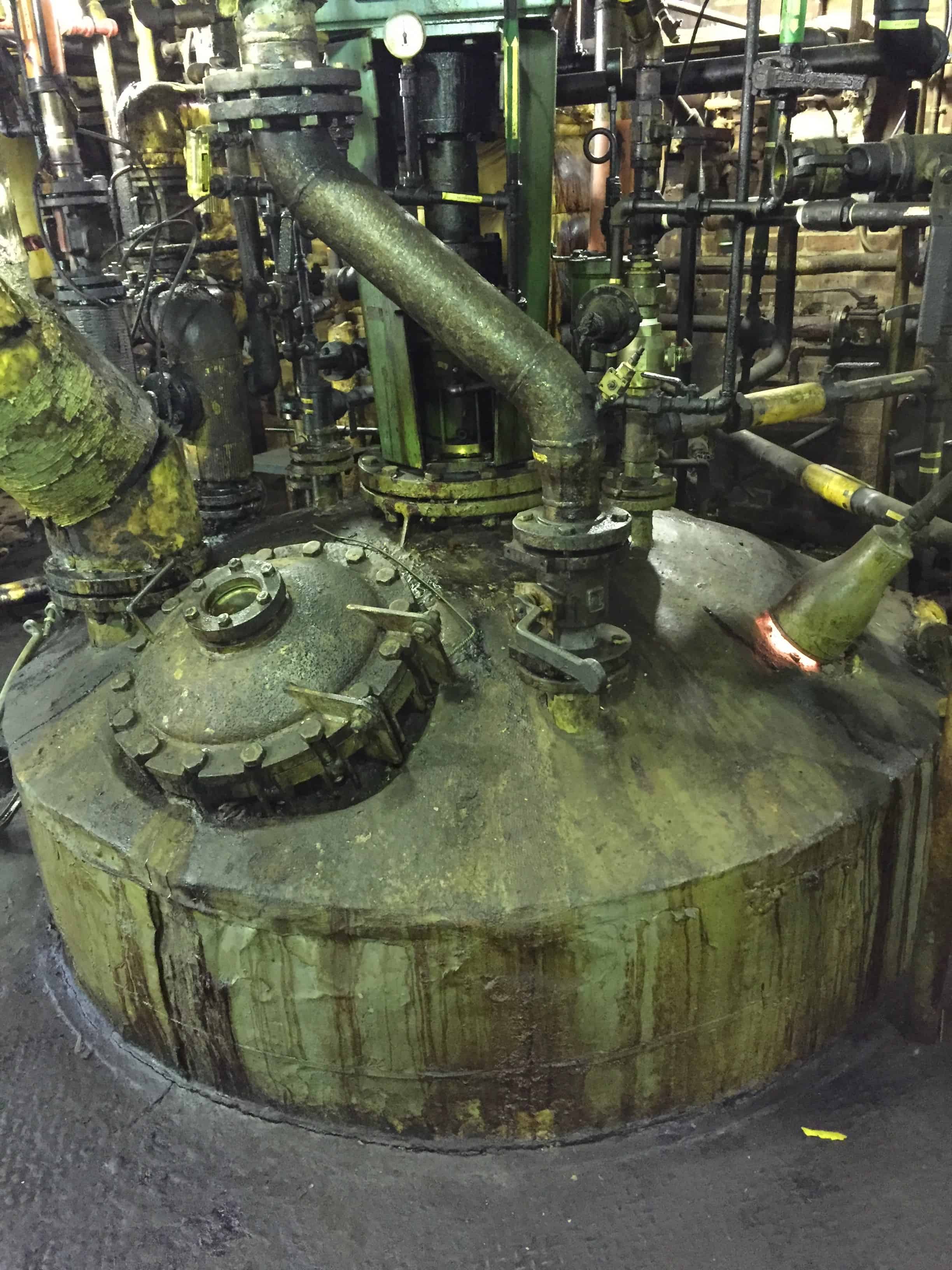
Before demolition could begin, electrical, water, and sewer utilities were separated so buildings scheduled for demolition could be isolated without interrupting service to structures being retained.
Phoenix removed remaining CNSL from process equipment and six bulk storage tanks while safely identifying, removing, and containerizing hazardous materials, including sulfuric acid, caustic, ethylenediamine (EDA), and triethylenetetramine (TETA). Asbestos abatement and regulatory requirements were completed before dismantling progressed.
Process piping, tanks, and equipment were then thoroughly cleaned and evaluated. Equipment with remaining market value was removed first and prepared for resale. Equipment and materials no longer suitable for continued use were directed toward recycling or demolition.
Six process buildings were demolished to grade. Process equipment was removed from the remaining three production buildings, which were gutted as required for their new use. Site tanks and diked containment areas were also removed as part of the property's reconfiguration.
Recovering Value Through Asset Recovery
Equipment that still has industrial value is fundamentally different from scrap.
A stainless steel tank, heat exchanger, mill, or process dryer may continue operating for years in another facility. Recovering these assets before demolition preserves considerably more value than recycling them solely for their raw material content.
Phoenix evaluated the facility's equipment before demolition to determine what could be preserved for continued industrial use.
Assets recovered for resale included:
- 25 stainless steel tanks ranging from 1,000 to 15,000 gallons
- 10 heat exchangers
- 2 Rotex screeners
- 2 Hosokawa mills
- 1 Witte fluid bed dryer
- 1 V-blender
- 1 Ribbon blender
Phoenix's access to the secondary process equipment market allowed these assets to be marketed based on their remaining industrial value rather than their scrap value. The resulting equipment sales helped offset the owner's site reconfiguration costs.
After reusable equipment was removed, the remaining materials were evaluated for recycling or beneficial reuse. The project recovered approximately 1,350 tons of scrap steel and 150,000 pounds of stainless steel. Approximately 10,000 tons of masonry were crushed and left on site for reuse, reducing disposal requirements while preparing the property for redevelopment.
Preparing the Property for Its Next Use
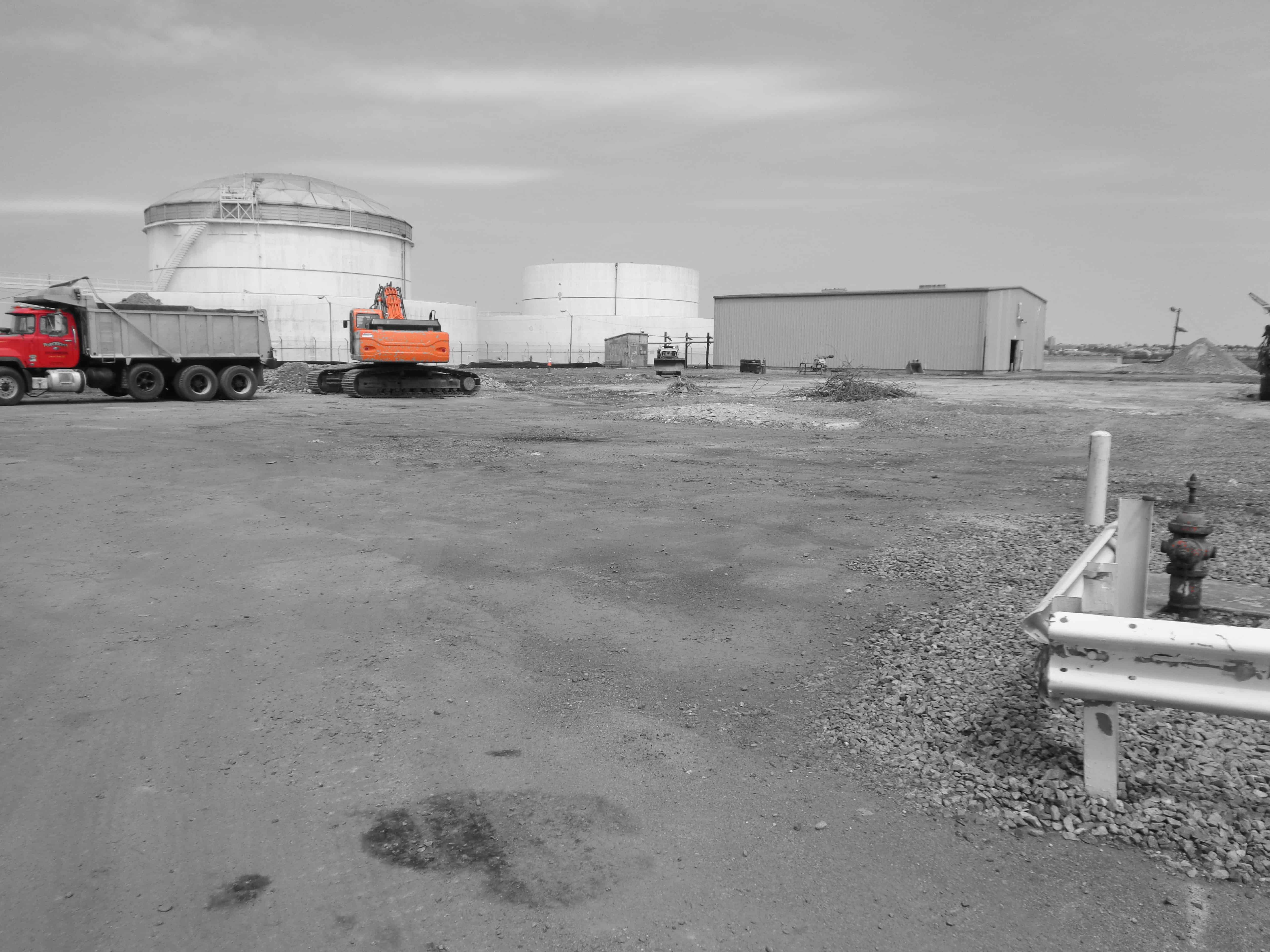
The Newark project required far more than demolition. It involved cleaning a former chemical manufacturing facility, safely removing residual products and hazardous materials, recovering equipment with remaining industrial value, recycling materials wherever practical, and preparing the site for redevelopment.
By combining industrial redevelopment services with direct access to the secondary process equipment market, Phoenix helped reduce the owner's redevelopment costs while returning valuable equipment to productive service instead of scrap.
The result was a redevelopment-ready property and industrial assets that continued operating elsewhere rather than being lost to recycling.